



![[Saxophone] Expression Design for Etude No. 1: Counting Techniques and Tone Color Choices That Support a Relaxed Tempo](https://i.vimeocdn.com/video/2128638279-447254f06d633dbb16e05ce22b6dfe60906fe7f82d2c2a86d7628c6cab261e30-d_640x360?&r=pad®ion=us)
[Saxophone] Expression Design for Etude No. 1: Counting Techniques and Tone Color Choices That Support a Relaxed Tempo
Ferling's Etude No. 1 is an adagio work that tests the expressive capacity of the **saxophone**. From detailed counting in eighth-note subdivisions, to choosing the right "piano" tone color, to breath techniques that maintain phrase continuity, this lesson explains the specific form design needed to perform this masterpiece beautifully.

Mastering Double Tonguing on Bassoon: Foundations and Practice for Commanding Fast Passages
For bassoonists, the rapid tonguing demanded in works by Mozart, Mendelssohn, and others is one of the greatest technical challenges. This article offers a professional player's in-depth guide covering the fundamental concept of double tonguing, specific exercises for keeping the T and K articulations even, and how to extend the technique to triple tonguing. Learn the secrets to increasing speed while maintaining an ideal tone quality.
![[Trumpet] Steps to Refine Your Tone: Mastering Breath Control for the Ideal Sound](https://i.vimeocdn.com/video/1872855527-f088b3b5756c50e65111f7a64faf612294a94d1ac44a73ac9c2bdfa74b3ba065-d_1280x720?&r=pad®ion=us)
[Trumpet] Steps to Refine Your Tone: Mastering Breath Control for the Ideal Sound
The single greatest factor affecting trumpet tone quality lies in airflow and the body's control that supports it. This article covers step-by-step breathing exercises timed to a count, how to maintain the oral cavity space that produces a rich resonance, and efficient practice methods using tools such as a breath builder. From beginners to intermediate players, learn the essence of the fundamentals every trumpet player should work on daily, and strive for freer, richer musical expression.
![[Bassoon] The Art of Note Endings: A Checklist for Creating Seamless Gradations](https://i.vimeocdn.com/video/1845673361-b564793d2a833bcbdc67b26df994e6eb74288225238235239aeec110d4ba3a2f-d_1280x720?&r=pad®ion=us)
[Bassoon] The Art of Note Endings: A Checklist for Creating Seamless Gradations
For bassoonists, achieving beautiful note endings is an eternal challenge. This lesson teaches you how to control breath pressure and embouchure to create smooth gradations that fade seamlessly into silence, rather than cutting off abruptly.
![[Saxophone] Conquer Fast Passages! The Ultimate Guide to Mastering Rapid Note Sequences](https://i.vimeocdn.com/video/1845331501-add648e99e411c5321ae8d69f2eed88356ee122090456adfcea831c496d9e9c0-d_1280x720?&r=pad®ion=us)
[Saxophone] Conquer Fast Passages! The Ultimate Guide to Mastering Rapid Note Sequences
Fast passages (rapid note sequences) are one of the most challenging aspects of saxophone playing. Rather than blindly trying to play faster, "slow and steady" practice methods such as changing rhythms, dividing phrases, and practicing backward actually provide the fastest path to mastery. This article explains concrete steps for building reliable finger movement and achieving smooth, fluid passages.
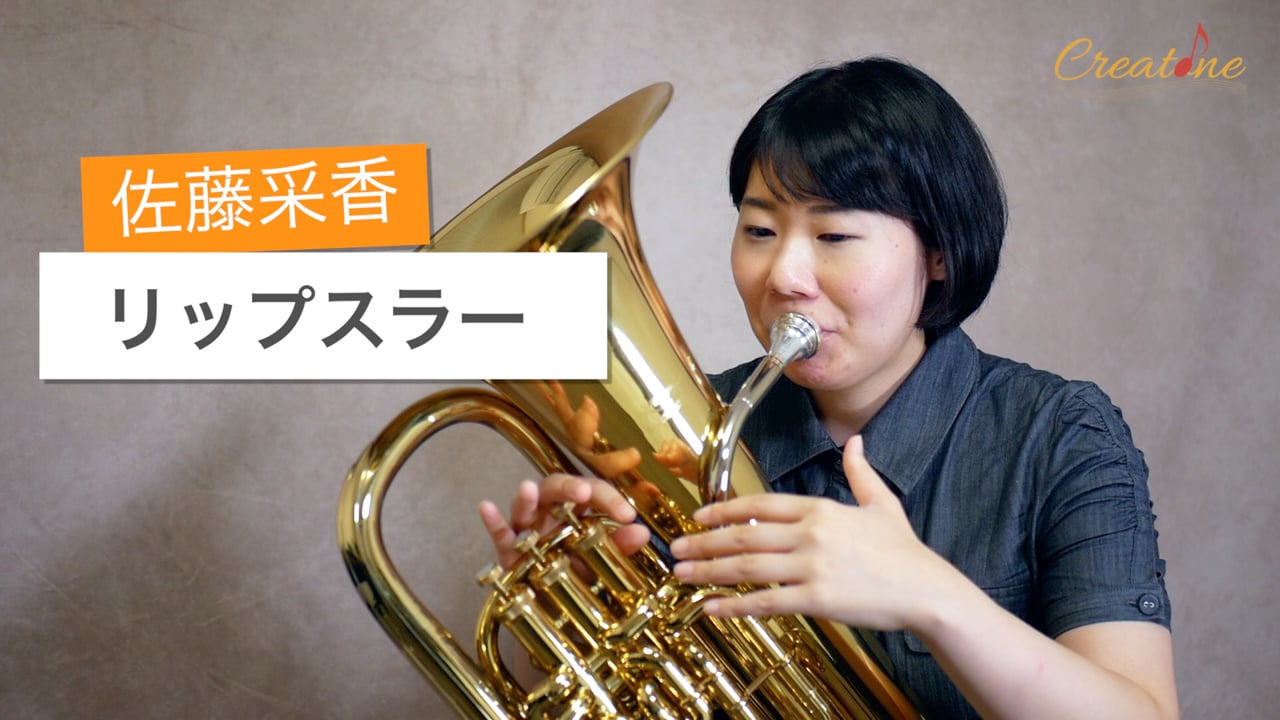
How to Improve Euphonium Lip Slurs: Clarify Your Target Note to Enhance Tone Quality
The reason euphonium lip slurs lack smooth transitions and produce unstable tone quality is that players fail to clearly visualize the target note. By defining your target and practicing while imagining the desired tone quality, you can achieve stable performance of descending patterns such as B-flat to F to B-flat, as well as ascending patterns.

Flute Tonguing Fundamentals: Building Clear Articulation Through Flexible Tongue Control
For flutists, tonguing is an indispensable technique that gives music rhythm and contour. Yet many players struggle with issues such as a blocked sound from overusing the tongue or uneven rhythm. By redefining the tongue's role from "stopping the sound" to "segmenting the airstream," this lesson presents a method for achieving clear, supple articulation while preserving the pure, resonant tone unique to the flute.
![[Oboe] Refining Your Tone with Reed Practice: A Practical Guide from Basics to Application](https://i.vimeocdn.com/video/1845714404-4b28559da3fee3fad095989866ce62269110955bafc80d5f555735bc1ff607b7-d_1280x720?&r=pad®ion=us)
[Oboe] Refining Your Tone with Reed Practice: A Practical Guide from Basics to Application
To refine your oboe tone, practicing on the reed alone forms the foundation. By learning practical steps for improving reed control -- from how to hold the reed, to 8-beat sustained tones and short articulation exercises, to pitch variation drills -- you will be able to play more easily when you pick up the oboe.

Logical Mastery of All-Key Scales on Tuba: Bridging Fingerings from Concept to Physical Intuition
Scale practice on tuba is far more than a finger exercise. By achieving a uniform tone and attack across all keys and developing a physical understanding of piston mechanics, you can dramatically expand your freedom of expression. This lesson provides a thorough guide from conceptual organization to building concrete physical intuition.
![[Trumpet] The Essence of Staccato and Tenuto: A Q&A on Controlling the Space Between Notes](https://i.vimeocdn.com/video/1845782441-9d9e3f0127ed1f2f38e18043df2b2645c5d010d47c920eb4240d5359f9be673a-d_1280x720?&r=pad®ion=us)
[Trumpet] The Essence of Staccato and Tenuto: A Q&A on Controlling the Space Between Notes
In trumpet articulation, staccato and tenuto are essential expressive techniques. Rather than the common understanding of staccato as "cutting notes short," its true meaning is "separating one note from another." Whether it appears on eighth notes or half notes, any time there is a gap between notes, it can be considered staccato. Tenuto means "to sustain the note fully," but when performing in a large concert hall, leaving a very slight gap between notes helps the audience clearly perceive that you are playing tenuto. This article provides a detailed Q&A-format explanation of the true meaning of staccato and tenuto, how to express them in large halls, and how to practice by alternating between staccato and tenuto.

Clarinet Embouchure: Building a Stable Foundation That Holds Up When Doubling
The bass clarinet's wide resonance makes it prone to tonal and pitch instability from excessive biting or embouchure shifts. By establishing a fixed clarinet embouchure and creating a reliable reference point, you can stabilize your articulation and intonation even when doubling between instruments.
![[Saxophone] Mastering the Growl Technique: A Q&A on Perfecting Expression Through Voice and Air Pressure](https://i.vimeocdn.com/video/1845662828-b338642e769c7e2a1cdf7f37070c259c59084f4c9996070988a9d7ca666a8c73-d_1280x720?&r=pad®ion=us)
[Saxophone] Mastering the Growl Technique: A Q&A on Perfecting Expression Through Voice and Air Pressure
The saxophone growl technique is an advanced method that creates unique expressiveness by vocalizing while playing. By increasing air pressure and using roughly twice the usual amount of air, you can achieve a deep tone that cannot be produced through standard playing. The growl technique sounds particularly striking when performed at augmented third and diminished fourth intervals. This article provides a detailed Q&A covering everything from the basics of the growl technique to solutions for common issues such as difficulty producing sound and running out of breath.

Saxophone Tonguing Practice: A Practical Approach Using Scales
Scale-based practice is an effective method for improving fundamental saxophone tonguing technique. By understanding the difference between tenuto and staccato and maintaining a consistent airflow using long tones as a reference, you can enhance both tonal consistency and expressiveness. This article provides a detailed guide from the basics of saxophone tonguing practice to practical methods using scales.

Advanced Saxophone Vibrato: The Art of "Variation" and "Non-Vibrato" That Brings Music to Life
Vibrato is not something you simply apply continuously. Discover the profound philosophy of a professional who says, "Non-vibrato is the ultimate vibrato." By adjusting the speed and depth of your vibrato waves to match emotions such as joy and sorrow, and by sometimes choosing not to use vibrato at all, this lesson teaches you the mindset for maximizing the expressive potential of the saxophone.
![[Horn] From Fundamental Concepts to Physical Awareness: How Posture and Right Hand Position Achieve Sound Projection](https://i.vimeocdn.com/video/1873079233-eeb63f16a297ba64069807c2b353d7c72ee00379ad283ac8ddb041d91fe6cf5e-d_1280x720?&r=pad®ion=us)
[Horn] From Fundamental Concepts to Physical Awareness: How Posture and Right Hand Position Achieve Sound Projection
In horn playing, posture and right hand position are critical elements directly linked to sound projection and tone quality. By understanding the concept of natural posture when holding this heavy instrument and experiencing the correct method of placing your right hand in the bell, you can resolve issues such as muffled or inaudible sound and achieve a resonant performance. This article covers everything from the basic way to hold the horn to how right hand placement and elbow position affect your sound, taking an approach that moves from concept to physical awareness.
![[Saxophone] From Concept to Physical Sensation in Daily Training: Integrating Articulation, Vibrato, and Scales into a Unified Practice Routine](https://i.vimeocdn.com/video/1845661578-ca74e66a4810b10fea8d06a9e75a5e0bc0365e0483689ec2d91f94b29eb6b39d-d_1280x720?&r=pad®ion=us)
[Saxophone] From Concept to Physical Sensation in Daily Training: Integrating Articulation, Vibrato, and Scales into a Unified Practice Routine
This lesson provides a detailed guide on daily training to elevate your saxophone playing. From articulation (half-tonguing), vibrato, and scales to effective metronome use, it explains how to transform conceptual understanding into real physical sensation. Discover the steps to turn your daily fundamentals practice into a creative process for aligning your ideal tone with your technique.

Stabilizing Intonation on Clarinet (Bass Clarinet): Fundamentals of Articulation and Air Pressure
Bass clarinet is prone to pitch instability, but by establishing proper articulation and air pressure control -- the fundamentals of clarinet playing -- you can achieve stable intonation. This lesson also covers small adjustments you can use when fatigue sets in.
![[Saxophone] Mastering the Altissimo Register: Achieving High Notes Through Throat Control and a "Singing" Mindset](https://i.vimeocdn.com/video/1845666783-990de2bc3ff88176de58cd2ad1c1c705406c28937ad133d4acdd12ded811ea1a-d_1280x720?&r=pad®ion=us)
[Saxophone] Mastering the Altissimo Register: Achieving High Notes Through Throat Control and a "Singing" Mindset
Altissimo (the super-high register) dramatically expands your expressive range on the saxophone. Learn throat techniques and a unique practice method to solve common problems such as missed notes and harsh tone.
![[Saxophone] Mastering Embouchure: The "Thick Rubber Band" Imagery for Flexible Control](https://i.vimeocdn.com/video/1845664664-818cd182441f63bf64332cf9de90f1507aa7a44745d1acd94879018de955e651-d_1280x720?&r=pad®ion=us)
[Saxophone] Mastering Embouchure: The "Thick Rubber Band" Imagery for Flexible Control
Is your embouchure becoming rigid from trying too hard to lock it in place? By adopting a professional's imagery of a "thick rubber band," you can achieve flexible control and a stable tone. This article also covers self-check methods for building your ideal form.

Tuba Lip Vibration: How to Build Your Foundation with Mouthpiece Practice
Lip vibration, the foundation of tuba playing, begins with mouthpiece practice. By balancing airflow and lip vibration and developing accurate pitch awareness, you can produce a better sound when you pick up the instrument. Rather than neglecting mouthpiece practice, making it part of your daily warm-up routine is the fastest path to improvement.
